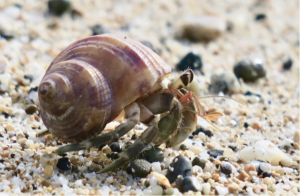
The shells on our logo are inspired by hermit crabs. While the shells themselves are not meant to represent hermit crabs literally, the behavior of hermit crabs offers a powerful metaphor for how we approach our work: thoughtfully planning for the future, with care for both the individual and the community.
Hermit crabs are known for their unique and surprisingly cooperative behavior when it comes time for exchanging shells. As they grow, they must eventually find a larger shell to continue to stay protected. But unlike many creatures in nature, hermit crabs do not approach this process selfishly or impulsively.
When a hermit crab discovers a new, empty shell, it doesn’t immediately move in. Instead, it signals to nearby crabs that a shell exchange is possible. What happens next is remarkable: the crabs gather and form a single-file line, ordered from smallest to largest. When the moment is right, they move together—each crab leaving its current shell and stepping into the next larger one, all at the same time.
This coordinated exchange allows every crab in the line to end up with a better-fitting home—one that offers protection today while allowing room for growth tomorrow. By working together and minimizing the time spent exposed, the crabs reduce their vulnerability and increase their collective security.
We see this process as a reflection of thoughtful planning. The goal isn’t just growth for growth’s sake, but continuity, protection, and preparation—making changes deliberately, at the right time, and in a way that safeguards what matters most. Like the hermit crabs, we believe that working together to plan for the future allows you to move forward with confidence, knowing you are protected now and positioned for the future.
This link points to a short YouTube video from BBC Earth that explains more about hermit crabs.